


 Facebook
 Instagram
 LinkedIn
 Youtube
What is Screen Printing? A Comprehensive Guide to High-Quality Print Results

Written by
Karin Goffe
Printing methods
Screen printing is a popular printing method, especially in the textile industry, thanks to its colour versatility, durability and ability to print on various materials. In this blog post, you will learn everything about this printing technique – what it is, how it works, and its advantages and disadvantages.
We also compare screen printing with other textile printing methods, such as transfer printing. At Hot Screen, we specialise in textile transfer printing and therefore highlight the specific characteristics of both methods.
What Is Screen Printing?
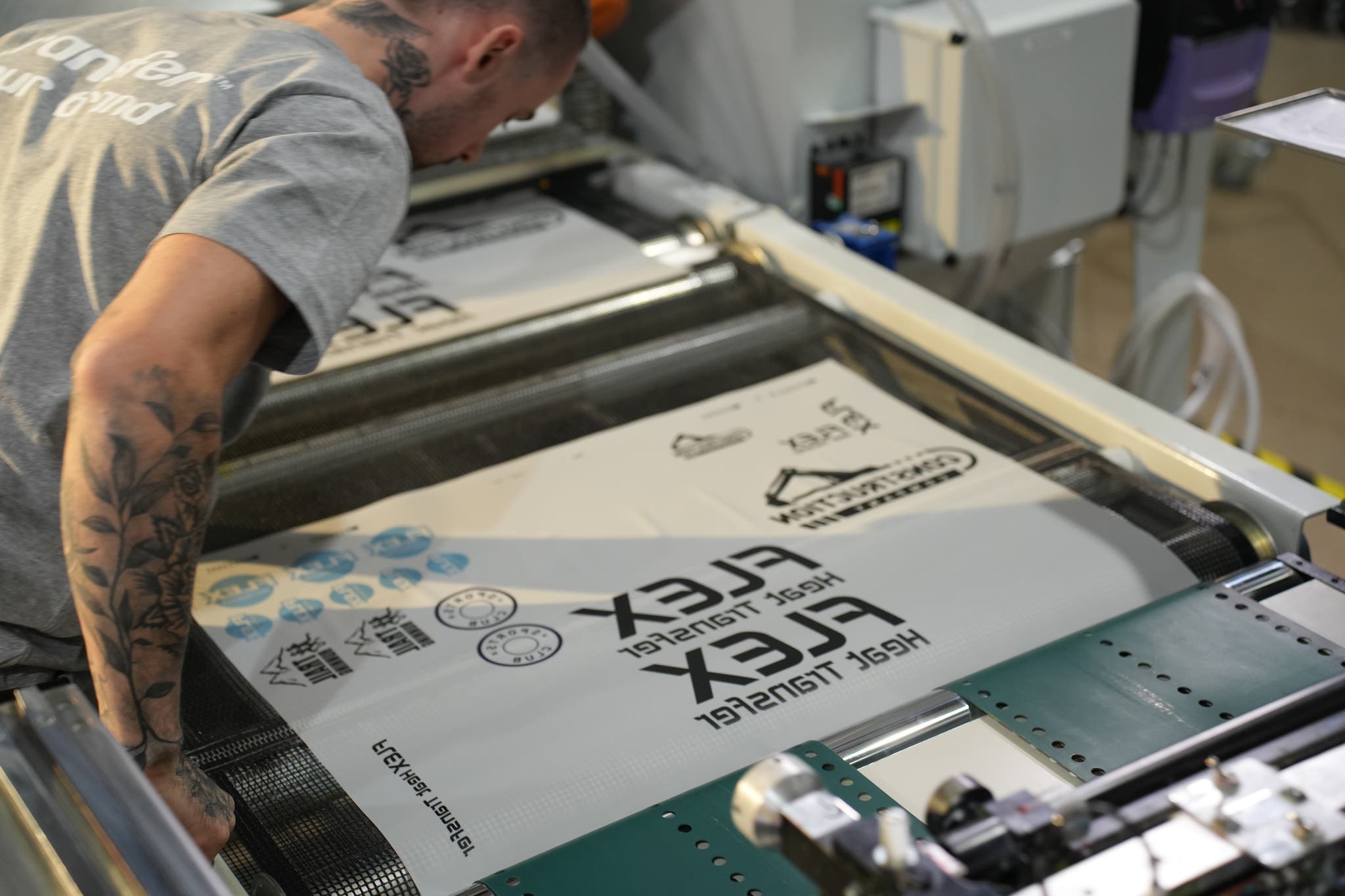
Screen printing is a traditional printing technique where ink is transferred onto a material – most commonly textiles – using a rubber squeegee through a fine mesh screen. Areas that should not be printed are blocked using a stencil. As the ink is pulled across the screen, it is pressed through the open areas, creating the desired print.
How Does Screen Printing Work?
Screen printing is based on a precise process. First, a screen is prepared with a stencil containing the design. The screen is mounted in a frame and placed over the material, often a garment. The stencil ensures that ink is only applied where needed.
The ink is then applied to the screen. Using a squeegee, the ink is evenly spread across the surface and pressed through the mesh onto the material. After printing, the ink is dried, ensuring a long-lasting result.
Screen printing is widely used in textile production. Thanks to its strong colour coverage and durability, it is ideal for printing on T-shirts, sweatshirts, caps and more. It allows for vibrant colours and fine details, making it a preferred method for textile printing.
The Screen Printing Process in Six Steps
Screen printing is a precise process that can be summarised in the following six steps:
1. Preparing the screen: A fine mesh screen is stretched over a frame and coated with a light-sensitive emulsion.
2. Creating the stencil: A stencil with the desired design is created, either manually or using exposure techniques.
3. Exposure: The screen is exposed to UV light together with the stencil. The exposed areas harden, while unexposed areas remain washable.
4. Washing: The screen is washed, removing the unexposed areas and creating openings for the ink.
5. Ink application: The screen is placed over the material and ink is applied. A squeegee presses the ink through the mesh onto the surface.
6. Drying: The printed material is dried and cured to ensure a durable result.
At Hot Screen, we use a method similar to screen printing to produce transfer prints. Designs are printed onto a special carrier that can be stored for up to five years.
The finished transfers are then applied to textiles by the customer. The process requires precision and careful preparation. For multi-colour prints, a separate screen is used for each colour.
For best results, working with a professional supplier is recommended.
FAQ About Screen Printing
What Are the Advantages of Screen Printing?
Screen printing is versatile and works on materials such as textiles, plastics and metals. Pantone colours ensure consistent and precise colour reproduction. The prints are also highly durable and washable.
What Are the Disadvantages of Screen Printing?
The process is time-consuming and requires a separate stencil for each colour, making it less efficient for small runs. Colour gradients are also limited compared to other methods.
How Does Screen Printing Work?
Ink is pressed through a mesh screen using a stencil. Each colour requires a separate screen until the full design is complete.
What Is Screen Printing?
Screen printing is a printing method where ink is transferred using a stencil and mesh. It can be applied to a wide range of materials.
How Much Does Screen Printing Cost?
The cost depends on quantity, number of colours, design complexity and print size. For an exact quote, it is recommended to contact a professional supplier. At Hot Screen, you can calculate your price directly in our webshop.