 Facebook
 Instagram
 LinkedIn
 Youtube
How Is a Transfer Print Made? From Design to Finished Result

Written by
Karin Goffe
Products
At Hot Screen, we make heat transfers around the clock – approximately 150,000 per day using so called screen print technology. This means our transfers are produced on large sheets and then cured in hot ovens, cut and mailed to you. However, it is to simplify a rather extensive process. There is a lot more work behind our products, not least quality checks, mixing of special colours, maximizing the number of transfers per sheet to reduce waste, purify our process water. When we make heat transfers it can almost be called a craft, although it is an industry.
This is how we make heat transfers: the course of your order
We make heat transfer in a fast pace – Hot Screen is like a well-oiled machine! Each department has its own workflow, and each department moves your order forward in the making of the heat transfer. With a production time of a maximum of 5 working days we are also one of the fastest players in the industry, and we can be even faster: if you choose one of our express options, we can produce your order the same day and ship the day after.
1. Design and proofing
The journey begins with the customer’s design. Around 70 percent of our customers order their transfer prints directly through our webshop, where they can create or upload a proof. Other orders are received by email or phone and are handled by our sales support team.
Once the proof is approved, it moves on to Digital Pre Press. Here we ensure the correct file format, colors, and size, and optimize the layout on the printing sheets to minimize waste. For multicolor prints, each color is digitally separated to ensure perfect registration in the upcoming production steps.
2. Screen preparation and setup
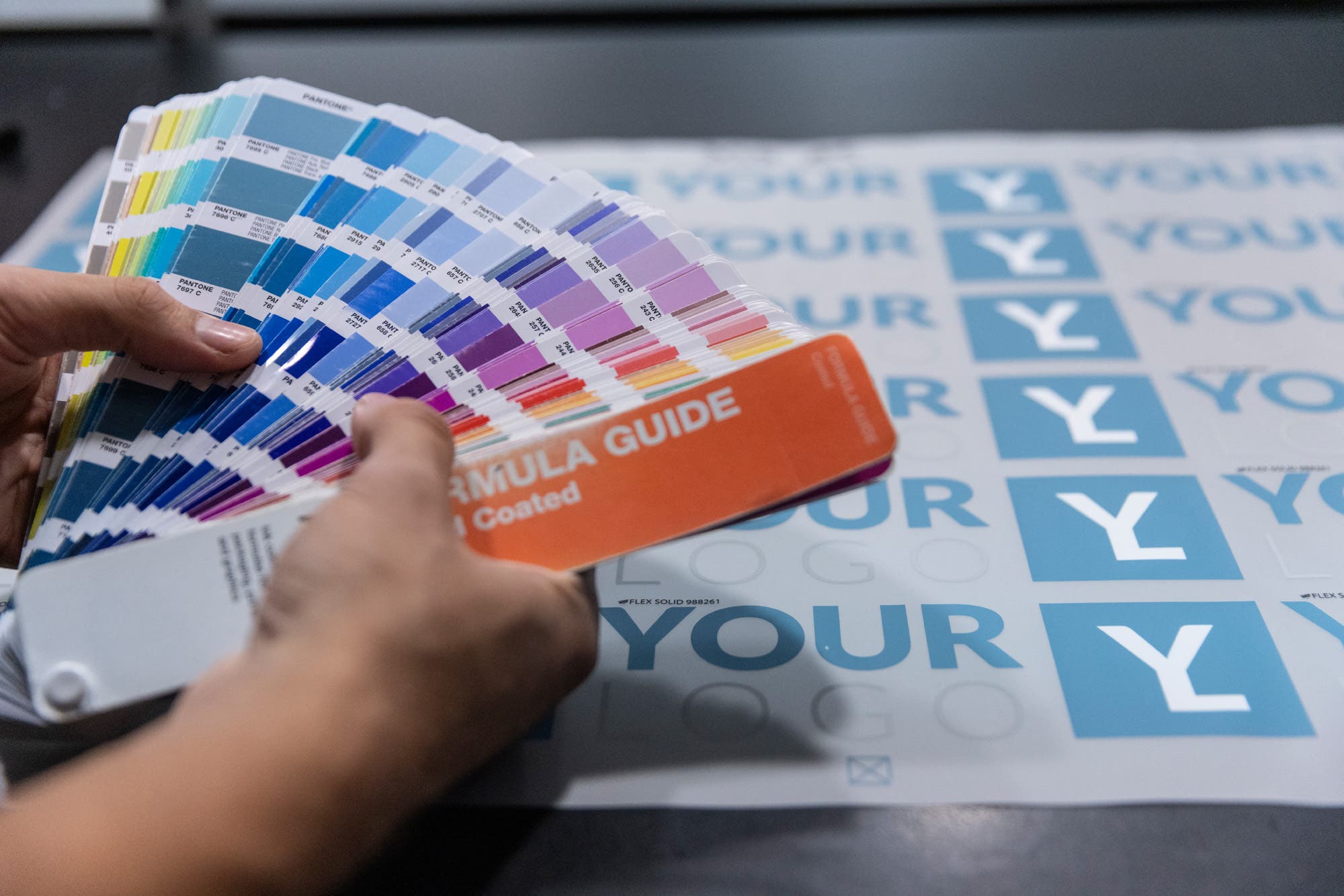
When the layouts are finalized, the screens are automatically prepared. In Pre Press, we inspect every screen before printing begins—one of many quality control steps in the process. We select the correct colors or mix new custom shades and prepare everything for production.
3. Printing of color layers
Now the actual printing begins. Our screen printing machines operate in three shifts, around the clock. Each color is printed as a separate layer onto the sheet with high precision. After that, an adhesive layer is applied, which later allows the transfer print to permanently bond to the garment. The technique requires accuracy and experience, and despite modern automation, a strong element of craftsmanship remains.
4. Drying and curing
After printing, the transfer prints are cured under controlled heat. In this step, both color and adhesive are fixed, giving the print its durability, coverage, and wash resistance. Every stage is monitored by our operators to ensure consistent quality.
5. Quality control
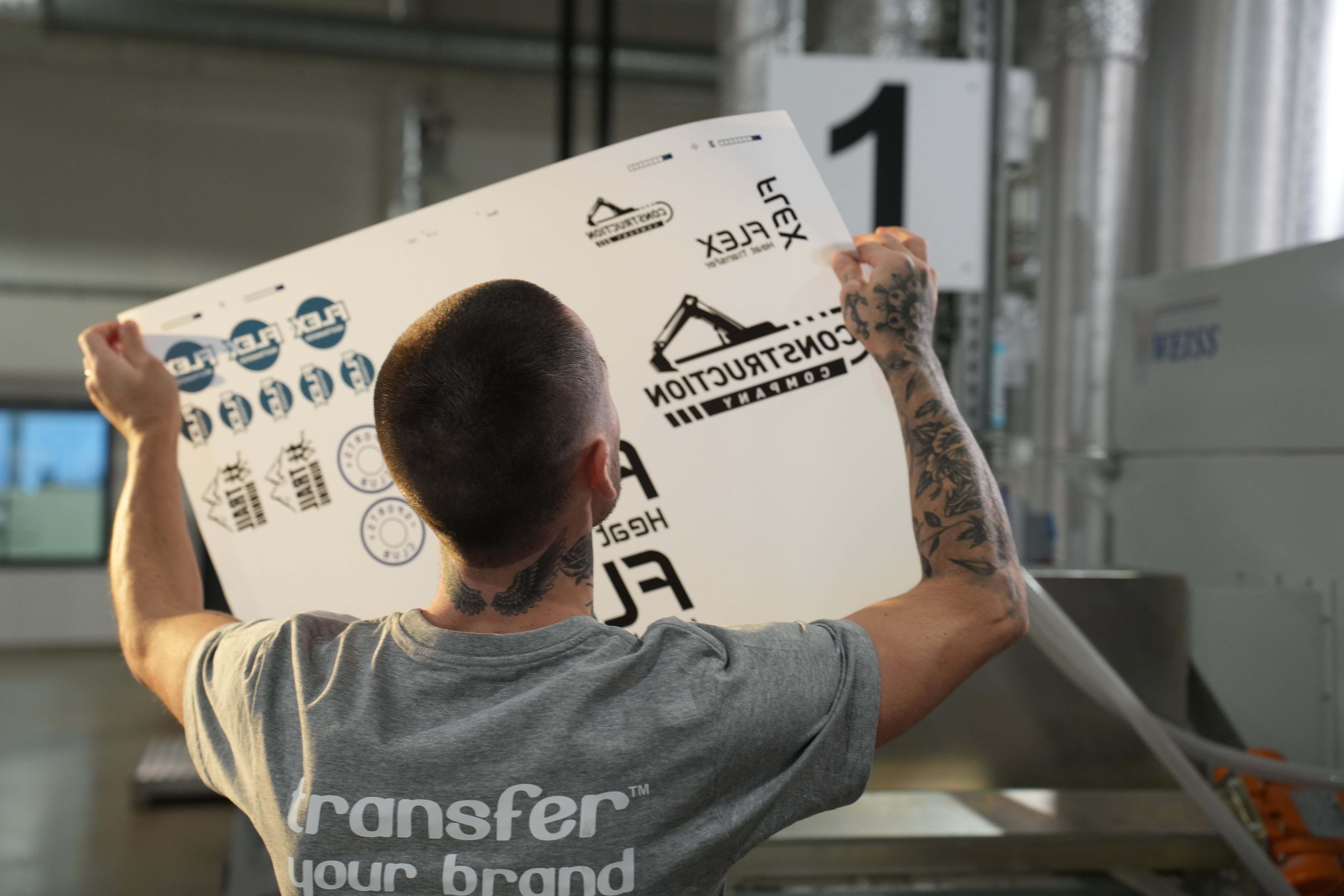
When the prints leave the machines, they are carefully inspected. We check colors, lines, adhesive layers, and registration accuracy. To ensure traceability, we save reference prints from every production run.
6. Cutting and packing
In Post Press, the transfer prints are cut and packed. To reduce unnecessary transportation, we pack as many orders together as possible. This results in fewer shipments and contributes to a lower environmental impact. The order is then dispatched—often within five working days. If you choose express production, we can manufacture the same day and ship the next day.
Different types of transfer prints we produce
To meet different needs and areas of use, we produce several types of transfer prints:
-
Stark Heat Transfer - Our most versatile option, ideal for both workwear and promotional clothing.
-
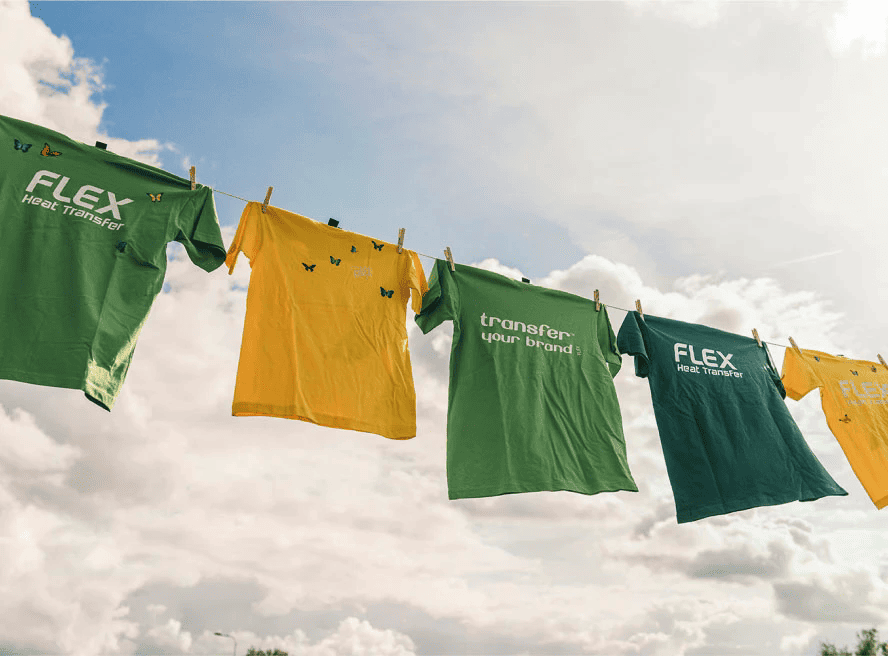
Flex Heat Transfer - Designed for garments with high elasticity, such as performance and sportswear.
-
Reflex Heat Transfer - For increased visibility, commonly used on high-visibility garments.
Regardless of type, the goal is always the same: to create transfer prints with long durability, sharp details, and a professional result.
Environmental responsibility and sustainability in focus
At Hot Screen, we strive to produce transfer prints with the lowest possible environmental impact. We use PVC-free materials, water-based inks, purification of process water, and actively work with energy efficiency throughout our entire production. Our prints withstand repeated washing without losing color or cracking, giving garments a longer lifespan and reducing resource consumption over time. Our products STARK Heat Transfer and FLEX Heat Transfer can also be stored for at least five years without any loss of performance.
Our production takes place in Sweden, ensuring short transport distances and full control over both working conditions and quality.