

 Facebook
 Instagram
 LinkedIn
 Youtube

Flex Printing for Textiles: Everything You Need to Know

Written by
Karin Goffe
Printing methods
Products
Flex printing is a unique and versatile printing method commonly used for decorating textiles, especially T-shirts. As the name implies, flex printing uses a flexible carrier film. Because the film is very thin, it adapts well to the garment and provides excellent wearing comfort.
But what exactly is flex printing, and why should you consider it for your next printing project? In this article, we explain everything you need to know about flex printing for textiles and compare it with our own product, Flex Heat Transfer.
What Is Flex Printing?
The most well-known form of flex printing is a technique where the design is cut out of colored films using a plotter and then heat-pressed onto the desired product, such as a textile. Flex printing is known for its high color brilliance and long durability. Even after many washes, the shape and color intensity remain largely unchanged.
Flex printing is also stretchable and durable. When applied correctly, even thin lines will not crack or break.
What Flex Means at Hot Screen
At Hot Screen, we have developed a flexible textile transfer called Flex Heat Transfer. The desired design or logo is printed onto a carrier material using screen printing. Unlike plotter flex printing, no individual films are layered—customers receive a finished transfer ready for application.
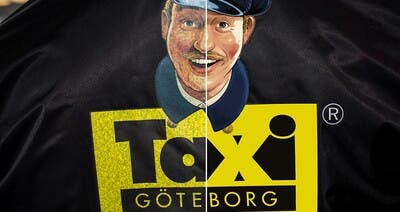
Hot Screen’s Flex Heat Transfers share the same advantages as traditional flex printing: thin, flexible transfers that adapt perfectly to the movement of the garment. In addition, our Flex Heat Transfer can be ordered with multiple colors in one logo and even photo effects, while plotter-based flex printing requires separate film layers for each color.
Flex Heat Transfer is OEKO-TEX® STANDARD 100 certified and meets all environmental standards. The transfers can be stored for up to five years without any loss of quality.
Like traditional flex printing, Flex Heat Transfers are highly durable. They can be washed and tumble-dried at 60°C and, when applied correctly, last for the entire lifetime of the garment.
Applications of Flex Printing for Textiles
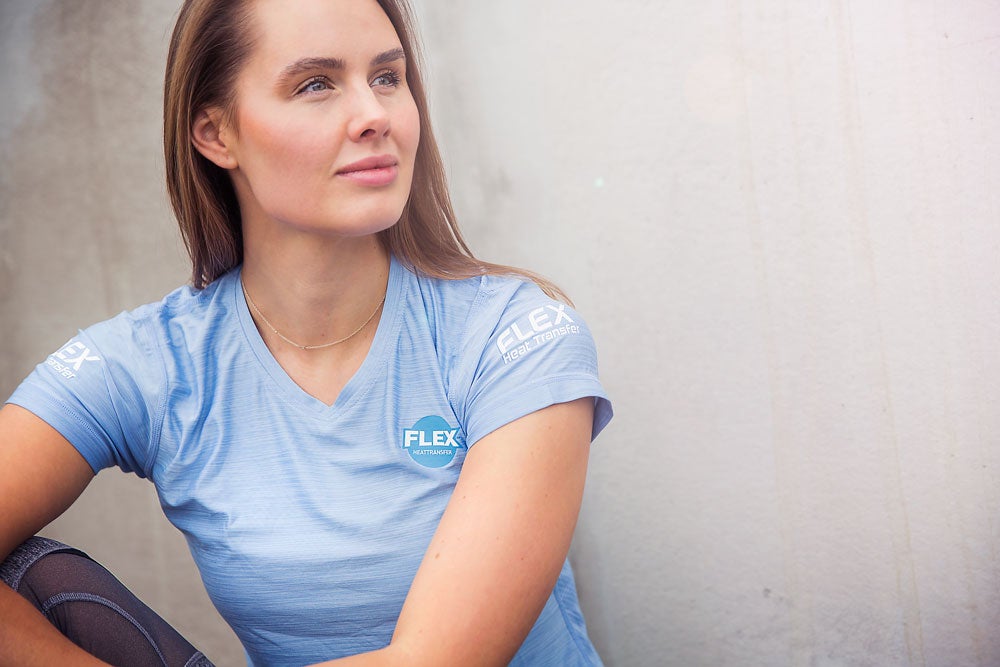
Flex printing is particularly suitable for text prints, small and detailed designs such as logos, stretchable materials, and children’s products. It is especially popular for sports shirts and jerseys—textiles worn directly against the skin.
The carrier films used are very thin yet highly opaque, resulting in a comfortable feel. Traditionally, flex printing is best suited for one- or two-color designs without gradients or fine details. At Hot Screen, however, we take it a step further. With our Flex Heat Transfers, it is possible to print the entire Pantone C color range and even color gradients—without sacrificing flexibility.
What to Consider When Using Flex Printing
Despite its versatility, there are some things to keep in mind when using flex printing. The design must be provided as a vector graphic in software such as Adobe Illustrator. When using plotters, a maximum of three colors per design is typically allowed.
Large designs may affect wearing comfort, as the flex film can reduce the breathability of the garment. In addition, large motifs may wrinkle after several washes if the application is not done correctly.
Compared to traditional flex printing, our Flex Heat Transfer can be produced across the entire Pantone C color spectrum, including gradients. It does not wrinkle even after multiple washes and maintains its quality throughout the garment’s lifetime, provided it is applied correctly. We have created a detailed application guide to help you apply our Flex Heat Transfers properly.
Why Flex Printing Is an Excellent Choice for Textiles
Although flex printing is known for its durability and resistance, there may be situations where you want to remove a flex print. This can be difficult and often requires professional assistance to avoid damaging the fabric.
Hot Screen’s Flex Heat Transfers are generally not removable and, when applied correctly, last as long as the garment itself. If you wish to cover an existing flex print, we recommend applying a larger transfer over it. Our application guides explain how this can be done.
Flex Printing Compared to Other Printing Methods
Difference Between Flex Printing and Flock Printing
While flex printing and flock printing use similar techniques, they differ in texture and appearance. Flock printing has a soft, velvet-like feel, whereas flex printing offers a smooth, slightly glossy surface. Both are highly durable and vibrant when applied correctly.
Choosing between flex and flock printing is largely a matter of preference, as both methods enhance garments in their own way.
Difference Between Flex Printing and Digital Printing
Compared to digital printing, flex printing offers several advantages. It is particularly suitable for text and small, detailed designs such as logos and is often used for sports shirts and jerseys. The carrier films are thin yet highly opaque, providing a comfortable wearing experience. Additionally, flex printing is generally more cost-effective than digital printing for smaller quantities.
Flex printing offers an excellent way to enhance textiles with long-lasting durability and vibrant colors, making it suitable for a wide range of projects.